

Trust litigation is not general legal work. It requires deep familiarity with California’s probate code, the procedural rules of Orange County’s probate court, and the financial forensics that complex fiduciary disputes demand. When a trustee is mismanaging assets, a trust amendment looks suspicious, or a beneficiary is being deliberately kept in the dark, the attorney handling it needs to know exactly what to file, where to file it, and how to move fast enough to protect what’s at risk.
The Daily Jones and Company is based minutes from the Orange County Superior Court Probate Division at 660 Newport Center Drive, Suite 1000, Newport Beach. James Daily has spent more than 30 years litigating trust and fiduciary abuse cases — including complex, document-intensive matters that most firms are not equipped to handle. If you’re facing a trust dispute in Orange County, contact the firm for a free consultation.
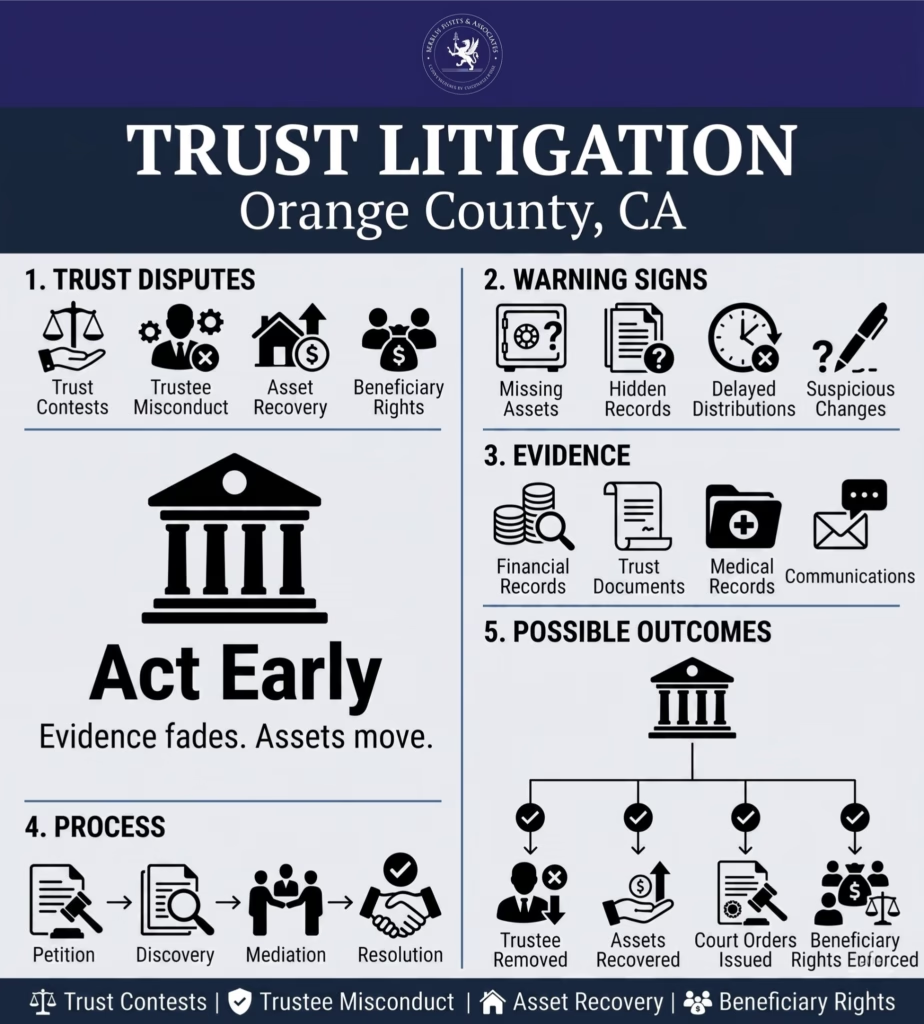
What Trust Litigation Actually Involves
Trust litigation covers any legal dispute arising from how a trust was created, amended, or administered. That includes challenging the validity of a trust document, contesting a suspicious amendment, holding a trustee accountable for misconduct, recovering assets that were improperly transferred, and petitioning for trustee removal. These matters are heard in the probate court under California Probate Code § 17200, which gives the court broad jurisdiction over internal trust disputes and fiduciary conduct.
The cases are almost always document-intensive. Financial records, medical histories, prior trust versions, trustee communications, and transaction logs all become evidence. A trust litigation attorney’s job is to build that record, move for appropriate relief — including emergency court orders when assets are at risk — and take the case to trial if a negotiated resolution isn’t possible.
Common Trust Disputes in Orange County
Orange County’s median household income and concentration of real estate wealth make it one of California’s most active jurisdictions for high-value trust litigation. Family-owned businesses, multimillion-dollar real estate portfolios, and multigenerational estate plans all create complexity — and disputes.
The most common matters the firm handles include:
- Trustee misconduct — self-dealing, hidden transactions, unauthorized distributions, or misuse of trust assets
- Trust contests and amendment challenges — validity disputes based on undue influence, incapacity, fraud, or improper execution
- Elder financial abuse — exploitation of vulnerable settlors by caregivers, new romantic partners, or family members
- Accounting disputes — trustees who withhold financial records or fail to account for missing assets
- Asset recovery — pursuing wrongfully transferred or concealed trust property under California Probate Code § 850
- Beneficiary rights enforcement — compelling communication, accountings, and distributions that trustees have improperly withheld
Signs You Need a Trust Litigation Attorney
Most clients don’t come in with a clearly defined legal claim. They come in with a situation that feels wrong. Common warning signs that trust litigation may be necessary include:
- A trustee who stops communicating or delays distributions without explanation
- A trust amendment made late in a parent’s life that dramatically shifts who inherits
- A caregiver, new spouse, or confidant who suddenly stands to receive a disproportionate share
- Financial accounts or property that cannot be located or explained after death
- Requests for trust documents or accountings that go unanswered
- A sibling acting as trustee who appears to be favoring themselves
If any of these describe your situation, the time to consult a trust litigation attorney is now — not after waiting to see how things develop. Assets can be moved, evidence can disappear, and California’s trust contest deadlines are jurisdictional.
Trustee Misconduct and Beneficiary Rights
What Trustees Are Required to Do
Under California Probate Code § 16060, trustees have a statutory duty to keep beneficiaries reasonably informed about the trust and its administration. Under California Probate Code § 16062, they are required to provide formal accountings that detail all assets, transactions, and distributions. These are not discretionary — they are legally enforceable obligations.
A trustee who refuses to provide information or accountings can be compelled through a § 17200 petition. That refusal can itself serve as evidence of broader misconduct.
What Courts Can Do About It
California Probate Code § 16420 gives courts extensive remedies for breach of trust: restoring misappropriated assets, ordering surcharge damages, voiding unauthorized transactions, and removing the trustee. In urgent cases — where distributions are being made that may be irreversible — emergency petitions can freeze trust activity while litigation proceeds.
The Daily Jones and Company’s fiduciary abuse and trust litigation practice is built around exactly this kind of complex enforcement work.
Undue Influence and Elder Financial Abuse
Orange County’s large population of high-net-worth retirees makes undue influence one of the most frequently litigated trust issues in the region. California Welfare and Institutions Code § 15610.70 evaluates four statutory factors: the settlor’s vulnerability, the influencer’s authority or control, the tactics employed, and whether the resulting distribution is inequitable.
In practice, these cases involve patterns — a caregiver who gradually isolated an elderly settlor from family, a trust amendment executed while the settlor was cognitively declining, a dramatic departure from an estate plan that had been consistent for decades. Medical records, financial histories, and witness accounts from the period surrounding the amendment are the most critical evidence. These are exactly the kinds of cases where early legal intervention — and the ability to preserve evidence before it disappears — determines the outcome.
How Trust Litigation Proceeds in Orange County
Trust disputes in Orange County are filed in and heard by the Orange County Superior Court Probate Division. The process begins with a petition under § 17200 that identifies the relief sought — whether that’s trustee removal, an accounting, invalidation of an amendment, or recovery of misappropriated assets. From there, the case proceeds through discovery, during which financial records, medical histories, prior trust versions, and trustee communications are obtained through subpoena and deposition.
Many trust disputes in Orange County resolve through mediation before reaching trial — particularly when one side has substantially stronger documentary evidence. Cases that proceed to hearing can take one to three years depending on complexity. For a realistic assessment of how California’s probate courts handle these matters and what timelines to expect, the initial consultation is the right place to start.
What to Look for in a Trust Litigation Attorney
Most Orange County residents involved in a trust dispute have never hired a litigation attorney before. The evaluation criteria that matter most are not the ones featured prominently in law firm marketing copy.
A trust litigation attorney should have direct probate court trial experience — not just estate planning or transactional work. They should be fluent in California’s trust statutes and comfortable in document-intensive cases involving financial forensics, medical records, and expert witnesses. They should be capable of moving for emergency relief when assets are at risk and willing to litigate through trial when settlement is not in the client’s interest. And they should be able to explain the realistic strength of a case clearly, without overselling or minimizing.
Ready to Evaluate Your Case
James Daily has tried cases in state and federal courts for more than 30 years, leads litigation personally rather than delegating to junior associates, and has handled trust and fiduciary abuse matters for individual clients, corporations, and sovereign entities. The firm’s case studies offer a direct look at the complexity of matters it has handled.
Frequently Asked Questions
What is the difference between a trust litigation attorney and an estate planning attorney?
Estate planning attorneys draft trusts, wills, and advance directives. Trust litigation attorneys go to court — they challenge trust documents, hold trustees accountable, recover misappropriated assets, and represent beneficiaries in probate disputes. The skill sets overlap minimally. If a trust dispute has already arisen, an estate planning attorney is generally not the right resource.
Can a trustee be removed in Orange County probate court?
Yes. California Probate Code § 16420 authorizes courts to remove a trustee for breach of fiduciary duty, self-dealing, mismanagement, or conduct that threatens the trust’s assets or beneficiaries. A petition is filed with the Orange County Superior Court Probate Division and supported by evidence of the misconduct. Courts can also appoint a temporary or successor trustee during proceedings.
Can beneficiaries force a trustee to provide financial records?
Yes. Under California Probate Code § 16062, beneficiaries are entitled to a formal trust accounting. A trustee who refuses can be compelled by court order through a § 17200 petition. That refusal may also support additional breach-of-duty claims.
What qualifies as undue influence in a California trust dispute?
California Welfare and Institutions Code § 15610.70 defines undue influence through four factors: the victim’s vulnerability, the influencer’s authority or control, the tactics used, and whether the outcome appears inequitable. Courts pay close attention to isolation from family, dependency on the influencer, the influencer’s involvement in arranging or executing trust amendments, and dramatic departures from prior estate plans.
How long does trust litigation typically take in Orange County?
Cases resolved through mediation or early negotiation can conclude in months. Contested matters that proceed to probate court hearing typically take one to three years depending on complexity, the number of parties, and court scheduling. Acting early — before evidence is lost and deadlines expire — gives clients more options for both faster resolution and stronger litigation positions.
What if trust assets were transferred before the settlor died?
California Probate Code § 850 provides a mechanism to petition for the recovery of assets that were wrongfully transferred or concealed, whether that occurred before or after the settlor’s death. Courts can order their return, void the transfers, and in some cases impose liability on the recipient. These petitions are filed through the probate court and require evidence that the transfer was improper.
When is the right time to contact a trust litigation attorney?
As early as possible. Trust contest deadlines in California are jurisdictional — missing them permanently bars claims regardless of their merit. Evidence also deteriorates quickly: witnesses’ memories fade, financial records get closed, and assets move. If something about a trust or its administration looks wrong, the consultation itself costs nothing, and the information it produces is immediately actionable.


