

You’ve read the will, and something about it sits wrong.
Perhaps you’ve noticed a last-minute change that cuts out longtime family members, or the sudden appearance of a caregiver poised to inherit everything, or a signature that doesn’t look right — if this is the case, you may have grounds for a legal challenge.
Contesting a will in California is not simply a matter of disagreeing with what a deceased person decided; California law requires specific, provable grounds, and the window to act is narrow.
If you believe a will was the product of manipulation, fraud, or a failing mind, speaking with a probate litigation attorney before that window closes is essential. We at Daily Jones & Company have spent decades handling and winning exactly these cases in California. Reach out for a free consultation before the probate clock runs out.
Who Can Contest a Will in California?
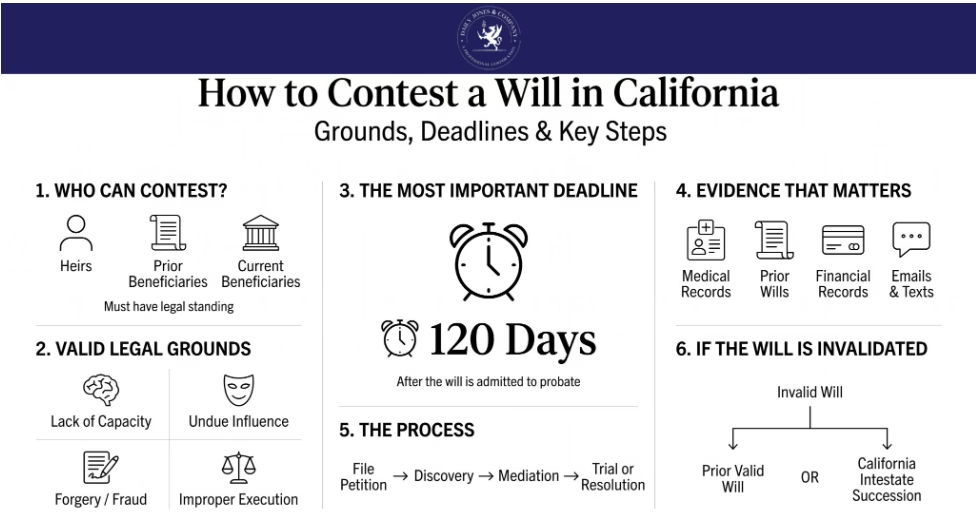
Not everyone can bring a will contest. California Probate Code § 48 defines who qualifies as an “interested person” — and only interested persons have legal standing to file. This includes heirs who would inherit under California’s intestate succession laws if no valid will existed, beneficiaries named in the current will, and beneficiaries named in a prior version who stand to receive less or nothing under the new one.
A person who would receive nothing whether the will stands or falls generally has no standing. Before investing time and resources in a challenge, confirming standing with a probate litigation attorney is a critical first step — filing without it means the court will dismiss the petition outright.
Valid Legal Grounds for Contesting a Will in California
California courts will not overturn a will because an heir feels they deserved more. A successful will contest requires proving one of the recognized legal grounds below.
Lack of Testamentary Capacity
California Probate Code § 6100.5 sets the standard: at the time of signing, the testator must have understood the nature of making a will, the extent of their property, and who their natural heirs are. A dementia diagnosis does not automatically invalidate a will — courts analyze the testator’s mental state specifically at the moment of execution, not their general medical history.
Medical records, caregiver testimony, and physician notes from near the signing date carry significant weight in these cases.
Undue Influence
Undue influence is the ground most often at issue in elder abuse and caregiver inheritance cases. California Welfare and Institutions Code § 15610.70 defines it through four factors: the victim’s vulnerability, the influencer’s apparent authority, the tactics used, and whether the outcome appears inequitable.
Proving it typically means establishing a pattern — isolation from family, dependency on the influencer, a dramatic change from prior estate plans, and secrecy around the will’s execution.
Fraud, Forgery, and Improper Execution
Fraud applies when the testator was deceived about what they were signing or about material facts affecting their decisions. Forgery and duress are also recognized grounds when the evidence supports them.
On improper execution, California Probate Code § 6110 requires a will to be signed by the testator and witnessed by at least two people present at the signing. A will that doesn’t meet these formalities can be challenged on procedural grounds regardless of its contents.
The California Deadline You Cannot Miss
California Probate Code § 8270 requires that a contestant file objections within 120 days of the date the will is admitted to probate. If you learn of a suspicious will after probate has already opened, that clock may already be running.
Before the will is formally admitted, a contestant can also file a petition objecting to admission — this is the earlier intervention point and generally the stronger procedural position. Once probate closes and assets have been distributed, clawing back an estate is often not possible at all.
What Evidence Courts Actually Consider
The evidentiary standard in a California will contest favors documented, contemporaneous evidence over retrospective family accounts. Medical records from the period surrounding execution are often central in capacity challenges, while financial records and communications — emails, texts, letters — can establish patterns of control or dependency in undue influence cases.
Prior wills showing a long-standing estate plan that suddenly changed near the end of life are among the most compelling circumstantial evidence available. The Daily Jones and Company’s fiduciary abuse and trust litigation practice handles exactly this kind of complex, document-intensive work — including the financial forensics that often determine outcomes.
Key Evidence Types
- Medical records — physician notes, psychiatric evaluations, and caregiver documentation from near the signing date
- Prior wills — showing a consistent estate plan that changed suddenly or under suspicious circumstances
- Financial records — establishing control, dependency, or unexplained transfers to the influencer
- Communications — emails, texts, and letters demonstrating the nature of the relationship
- Attorney drafting records — notes from the signing meeting, obtainable through discovery
The Will Contest Process: From Petition to Resolution
A California will contest begins with filing a petition in the probate court where the estate is being administered. That petition must state your grounds, your standing, and the relief you’re requesting — typically that the court refuse to admit the will or set it aside if already admitted.
From there, the case enters a discovery phase: depositions, subpoenas for medical and financial records, and expert witness disclosures. Many probate disputes resolve through mediation before reaching trial. Cases that do go to trial can take one to three years to fully resolve, and litigation costs are a real consideration worth discussing with your attorney before filing.
What Happens If the Will Is Invalidated?
If a court invalidates a will, it looks to the most recent prior valid will for distribution. If none exists, the estate is distributed under California’s intestate succession laws, which follow a fixed priority: spouse, children, parents, siblings.
Partial invalidation is also possible — courts may strike specific provisions while upholding the rest, particularly in cases involving fraud or undue influence targeted at a single bequest.
No-Contest Clauses: Understanding the Risk
Many California wills include a no-contest clause — a provision that disinherits any beneficiary who challenges the will and loses. Under California Probate Code § 21310 et seq, these clauses are enforceable, but with one critical protection: a beneficiary who contests with probable cause is shielded from disinheritance even if the challenge fails.
This probable cause standard is why consulting a probate attorney before filing is not optional. If you have standing and credible evidence, a no-contest clause is unlikely to stop you. If you file without probable cause, it may cost you your inheritance entirely.
Ready to Challenge a Will? Contact The Daily Jones and Company
A will contest is not the kind of legal matter you can approach tentatively. The evidence requirements are demanding, the procedural deadlines are unforgiving, and the stakes — financial and familial — are high.
Founding Attorney James Daily and the litigation team at The Daily Jones and Company have spent more than 30 years building and litigating these cases, including complex fiduciary abuse matters involving financial exploitation of the elderly, caregiver manipulation, and trustee misconduct. If you believe a will was procured through undue influence, signed without capacity, or otherwise altered to cut you out, schedule a consultation with the firm before the probate deadline passes.
Frequently Asked Questions
How long do you have to contest a will in California?
Under California Probate Code § 8270, you have 120 days from the date a will is admitted to probate to file a formal contest. If you have concerns before the will is admitted, you can file an objection to admission at any point during the probate opening process — often the stronger procedural position. Missing the 120-day deadline generally bars any future challenge regardless of how strong your evidence is.
Can siblings contest a will in California?
Yes, adult children and siblings typically have legal standing to contest a will, provided they would inherit under a prior will or under California’s intestate succession laws if the current will were set aside. A sibling who would receive nothing either way generally lacks standing. Courts will dismiss petitions brought by parties without a financial stake in the outcome.
Does dementia automatically invalidate a will?
No. A dementia diagnosis alone does not void a will under California law. Courts analyze the testator’s mental state specifically at the moment the will was signed, not their general cognitive decline. Medical records, physician notes, and caregiver testimony from the period surrounding the signing are the most relevant evidence in these cases.
What signs of undue influence do California courts look for?
Courts examine four statutory factors under Welfare and Institutions Code § 15610.70: the testator’s vulnerability, the influencer’s authority or control, the tactics used (isolation, dependency, secrecy), and whether the resulting distribution appears inequitable. Sudden changes from long-standing estate plans and the influencer’s direct involvement in arranging the will are particularly significant.
Can you contest a will after probate closes?
Contesting a will after probate closes and assets have been distributed is extremely difficult and usually not available as a remedy. California’s probate deadlines are jurisdictional, meaning courts generally cannot hear a challenge filed outside the 120-day window. Acting before probate closes — or as early in the process as possible — is always the stronger position.
What happens if a will contest succeeds?
If a court invalidates a will, it looks to the most recent prior valid will. If none exists, the estate passes under California’s intestate succession laws in a fixed order: spouse, children, parents, siblings. Partial invalidation is also possible, where courts strike specific provisions while upholding the rest.
How much does it cost to contest a will in California?
Will contest costs vary considerably depending on complexity, the amount in dispute, and whether the case settles or goes to trial. Cases involving medical records, forensic document examination, and expert witnesses can become expensive. The Daily Jones and Company offers consultations to assess realistic scope and cost before a client commits — the firm handles disputes starting at $250,000, reflecting the scale at which litigation is typically financially viable.


