

Suspicion is not evidence. Probate courts in California begin from a presumption that a properly executed will is valid, and under California Probate Code § 8252, the person challenging that will carries the burden of proof. That means the outcome of a will contest depends almost entirely on the quality and specificity of the evidence presented — not the strength of a family’s feelings about the result.
The type of evidence that wins depends on the legal ground being pursued. Lack of capacity requires different proof than undue influence; fraud requires different proof than improper execution. If you believe a will was procured through manipulation or signed when the testator was not mentally capable, The Daily Jones and Company can evaluate your evidence and advise on whether a contest is viable — schedule a free consultation before the probate deadline closes your options.
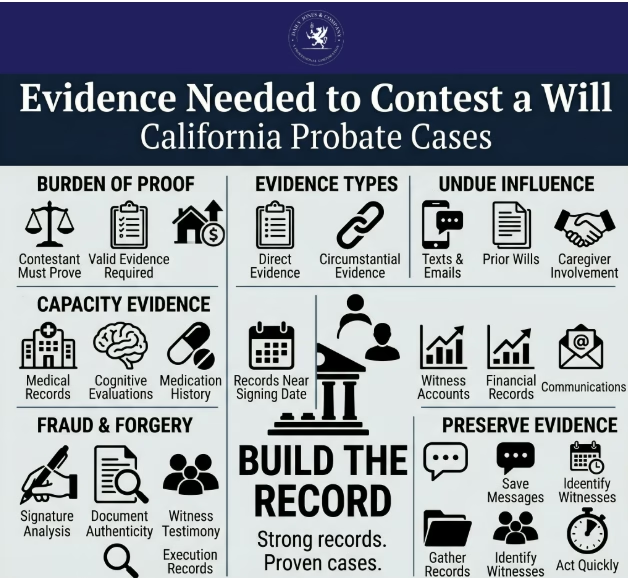
The Burden of Proof in a Will Contest
Under California Probate Code § 8252, the contestant bears the burden of proving the grounds for their challenge by a preponderance of the evidence — meaning it is more likely than not that the ground applies. In cases where a statutory presumption of undue influence arises — such as when the person who drafted the will also benefits from it — the burden may shift to the proponent of the will to disprove the allegation.
This matters practically. A contestant without sufficient evidence will lose even when manipulation may have occurred. Courts cannot speculate; they evaluate what can be proven through documents, testimony, and records.
Evidence of Undue Influence
Undue influence is the most contested ground in California will disputes, and direct evidence of it is rare. Courts frequently rely on patterns of circumstantial evidence evaluated together under California Welfare and Institutions Code § 15610.70, which examines vulnerability, authority, tactics, and the equity of the result.
The most persuasive evidence in these cases includes:
- Prior wills showing a consistent estate plan that changed dramatically near the end of the testator’s life
- Communications — texts, emails, and letters documenting the influencer’s role in the testator’s decisions
- Caregiver records showing increasing isolation from family members or other close relationships
- Financial records reflecting sudden transfers or changes to beneficiaries on accounts and policies
- Witness accounts from neighbors, physicians, or family who observed the relationship dynamic
- Attorney drafting notes from the signing meeting, which may reflect who arranged the appointment, who was present, and any unusual circumstances
Courts pay particular attention to whether the beneficiary was involved in arranging the will’s execution — a pattern the U.S. Department of Justice Elder Justice Initiative identifies as a common indicator of financial elder exploitation.
Medical Evidence and Testamentary Capacity
Capacity challenges live and die on medical evidence. California Probate Code § 6100.5 requires that courts assess mental state at the specific moment of execution — not the testator’s general cognitive history. A person with advancing dementia may have had a lucid interval at signing; a person without a diagnosis may have been severely impaired by medication or illness.
The records that matter most are those closest in time to the signing date:
- Physician notes and visit summaries from the weeks surrounding execution
- Cognitive and psychiatric evaluations, including any formal dementia or Alzheimer’s assessments
- Hospice or palliative care notes documenting mental status
- Medication records reflecting drugs known to impair cognition or judgment
- Neurological testing results
The Alzheimer’s Association and National Institute on Aging both document how rapidly cognitive function can fluctuate in later-stage dementia — which is precisely why the signing date, not the diagnosis date, is what courts focus on.
Evidence of Fraud, Forgery, and Improper Execution
Fraud and Forgery
Fraud requires showing the testator was deceived about what they were signing or about material facts influencing their decisions. Forgery requires demonstrating the signature or document was fabricated. Both benefit from forensic evidence: handwriting analysis comparing the disputed signature against authenticated prior signatures, expert testimony on document authenticity, and records showing who had physical access to the document before and after signing.
Improper Execution
California Probate Code § 6110 requires that a will be signed by the testator and witnessed by at least two people present at the signing. Evidence for improper execution challenges typically comes from the signing ceremony itself — the attorney’s notes, the witnesses’ accounts, and any inconsistencies in how the event was documented.
Circumstantial vs. Direct Evidence
Most will contest contestants assume they need a smoking gun — a recording, a confession, an eyewitness to manipulation. In practice, direct evidence of undue influence or fraud is rare. California probate courts regularly evaluate and rule on cases built entirely on circumstantial evidence: documented patterns of isolation, abrupt estate plan changes, suspicious timing, financial control, and dependency relationships.
What matters is not whether each piece of evidence proves the case on its own, but whether the full pattern — medical records plus communications plus prior estate plans plus witness testimony — points consistently in one direction. Probate litigators reconstruct cases chronologically, building a timeline that maps the testator’s declining health, the influencer’s growing access, and the will’s departure from prior plans. That reconstruction is the case.
Evidence That Weakens a Contest
Understanding what strengthens a will against challenge is equally valuable. Courts give considerable weight to:
- Independent attorney involvement — a drafting attorney with no personal stake in the outcome who documented the testator’s wishes independently
- Video-recorded signings showing the testator articulating their intentions clearly
- Formal capacity evaluations conducted near the time of execution
- Neutral witnesses with no financial interest in the estate
- A consistent long-term estate plan with only minor modifications over time
When these elements are present in the will being challenged, the evidentiary bar for a successful contest rises considerably.
How to Preserve Evidence Before It Disappears
Probate deadlines are not the only time pressure in a will contest. Evidence deteriorates independently: witnesses’ memories fade, medical records become harder to authenticate, financial accounts are closed and archived, and digital communications are deleted. Acting immediately after identifying a concern is essential.
Practical steps to take before consulting counsel include saving all texts, emails, and voicemails involving the decedent or the estate; preserving any financial records showing account activity, transfers, or beneficiary changes made in the final months of the decedent’s life; identifying witnesses who had regular contact with the testator and noting their potential observations; and requesting medical records as early as possible, as some providers archive and restrict access over time.
Speak with a Will Contest Attorney About Your Evidence
The gap between having concerns and having a viable case is almost always an evidence question. James Daily and the litigation team at The Daily Jones and Company have spent more than 30 years building and litigating will contests, fiduciary abuse claims, and trust disputes — including the financial forensics and medical record analysis that determine whether a challenge can succeed.
If you believe the evidence you have may support a contest, contact the firm for a free consultation and get a clear-eyed assessment before the 120-day probate deadline passes.
Frequently Asked Questions
Who has the burden of proof in a California will contest?
Under California Probate Code § 8252, the person contesting the will bears the burden of proof and must establish their grounds by a preponderance of the evidence — more likely than not. In cases involving statutory presumptions of undue influence, such as when the will’s drafter is also its primary beneficiary, the burden may shift to the estate to disprove the allegation.
What is the strongest evidence in a will contest?
Medical records from near the signing date, prior wills showing a consistent estate plan, attorney drafting notes, and documented communications between the testator and the alleged influencer are consistently among the most persuasive forms of evidence. Neutral third-party witnesses — physicians, attorneys, financial advisors — who observed the testator’s condition and relationships carry particular weight because they have no financial stake in the outcome.
Can text messages and emails be used in probate court?
Yes. Digital communications are admissible and often highly valuable in will contests — particularly in undue influence cases where texts or emails document the relationship between the testator and the person who stands to benefit. Preserve all digital communications involving the decedent, the beneficiaries, and the estate as early as possible.
Does dementia automatically invalidate a will?
No. A dementia diagnosis does not void a will on its own. Courts analyze the testator’s mental state at the specific moment of execution under California Probate Code § 6100.5. Medical records, physician notes, and caregiver logs from the period immediately surrounding the signing are the most relevant evidence — not the diagnosis date or a general history of cognitive decline.
What if I only have circumstantial evidence?
Circumstantial evidence is sufficient in California will contests. Probate courts regularly evaluate patterns — isolation, sudden estate plan changes, suspicious timing, financial control — and draw conclusions from them. A coherent, well-documented pattern of circumstantial evidence is often more persuasive than a single piece of direct proof.
Can a prior will help contest a newer one?
Yes, and it is often one of the most powerful forms of evidence available. A prior will establishing a consistent, long-standing estate plan that was dramatically altered near the end of a testator’s life — particularly when that change coincides with declining health or increased access by a new beneficiary — is exactly the kind of pattern courts scrutinize in undue influence cases.
How quickly should I start gathering evidence?
Immediately. Medical records become harder to obtain over time, witnesses’ memories fade, and financial accounts are closed and archived. Some evidence — voicemails, texts, online account records — can disappear entirely if not preserved quickly. The probate deadline governs when you must file, but evidence preservation cannot wait for that deadline to approach.


