

Yes — but not simply because the outcome feels wrong. A will can be contested in California when there is a specific, provable legal basis: the person who signed it lacked mental capacity, was manipulated into signing, or the document itself is defective. Courts begin from a presumption that a properly executed will is valid, which means the burden of proof falls on the person challenging it, not the estate defending it.
That distinction matters enormously. Many people search this question after being blindsided by a will that excludes them or dramatically favors someone unexpected — a caregiver, a new spouse, a single sibling. Feeling that the outcome is unfair is not a legal ground. Proving that the will was the product of fraud, undue influence, or a failing mind is. If your situation involves any of those circumstances, The Daily Jones and Company offers free consultations to help you assess whether you have a viable case before committing to litigation.
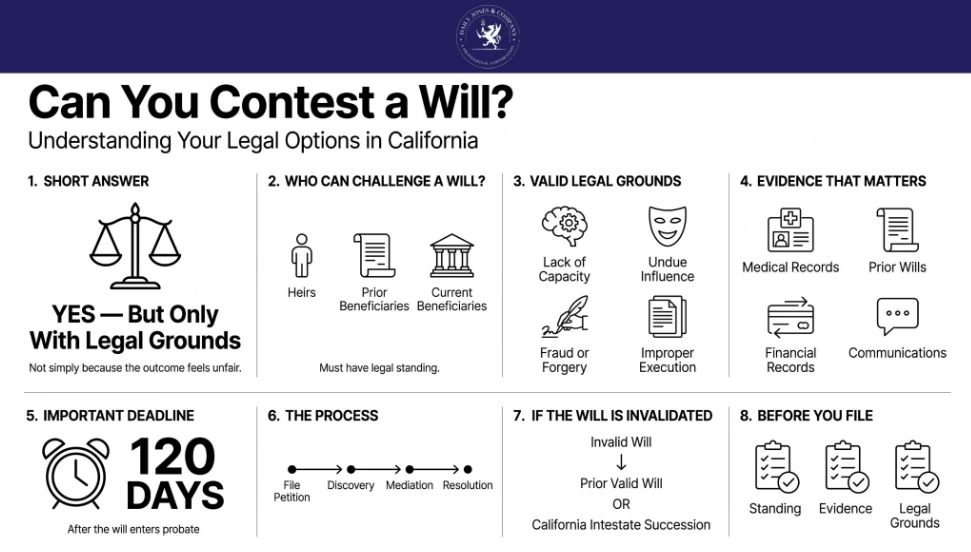
Who Has the Right to Challenge a Will?
Before examining grounds, you need to know whether you have legal standing — the right to bring a challenge at all. California Probate Code § 48 limits will contests to “interested persons”: those with a financial stake in the outcome. That includes heirs who would inherit if the will were invalidated, beneficiaries named in the current will, and beneficiaries from a prior will who stand to receive less under the new one.
A person unaffected by the outcome either way generally has no standing. Courts will dismiss a petition filed by someone without a provable financial interest, regardless of how strongly they feel about the situation. Confirming standing before filing is not a formality — it determines whether a challenge can proceed at all.
Legal Grounds for Contesting a Will
According to the Cornell Legal Information Institute, courts recognize a defined set of grounds for challenging a will’s validity. Each requires evidence; suspicion or disappointment alone is not sufficient.
Lack of Testamentary Capacity
California Probate Code § 6100.5 requires that at the time of signing, the testator understood what a will does, what property they owned, and who their natural heirs were. A dementia diagnosis does not automatically meet this standard — courts analyze mental state at the specific moment of execution, not a general decline over time.
Medical records, physician notes, and caregiver testimony from the period immediately surrounding the signing are the most relevant evidence. A testator with advancing dementia may still have had a lucid interval during execution, which is why contemporaneous documentation matters so much.
Undue Influence
Undue influence is the ground most commonly at issue when a caregiver, new romantic partner, or trusted advisor stands to inherit a disproportionate share of an estate. California Welfare and Institutions Code § 15610.70 evaluates four factors: the testator’s vulnerability, the influencer’s authority or control, the tactics employed, and whether the resulting distribution appears inequitable.
Courts pay close attention to patterns — isolation from family members, dependency on the influencer, the influencer’s involvement in arranging the will’s execution, and dramatic departures from prior estate plans. A will signed shortly before death that cuts out longtime heirs in favor of someone with recent, close access is exactly the scenario courts scrutinize.
Fraud, Forgery, and Improper Execution
Fraud applies when the testator was misled about what they were signing or deceived about facts that influenced their decisions. Forgery involves a signature or document that was fabricated. Duress covers situations where the testator signed under direct threat or coercion.
Improper execution is a distinct ground based on procedure rather than intent. California Probate Code § 6110 requires a will to be signed by the testator and witnessed by at least two people present at the signing. A will that fails these formalities can be challenged regardless of what it says.
What You Need to Prove
Under California Probate Code § 8252, the contestant bears the burden of proof. Courts do not invalidate wills on the basis of family suspicion, unequal distributions, or the feeling that something seems off. You must affirmatively demonstrate — through evidence — that one of the recognized legal grounds applies.
This is why the quality of evidence determines outcomes more than the strength of emotion. Cases built on medical records, financial forensics, witness accounts, and documented patterns of control are far more likely to succeed than those relying on family impressions after the fact.
Key Evidence in Will Contest Cases
- Medical records — physician notes, psychiatric evaluations, and caregiver logs from near the signing date
- Prior wills — showing a consistent, long-standing estate plan that changed suddenly or under suspicious circumstances
- Financial records — establishing control, dependency, or unexplained asset transfers to the influencer
- Communications — emails, texts, and letters documenting the relationship and any isolation tactics
- Attorney drafting records — notes from the will’s preparation and signing, obtainable through discovery
How Long Do You Have to File?
Timing in a will contest is not flexible. California Probate Code § 8270 requires that objections be filed within 120 days of the will being admitted to probate. If you have concerns before the will is formally admitted, you can file an objection to admission at any point during the probate opening process — which is often the stronger procedural position.
Missing the deadline generally bars your claim permanently, regardless of how strong the evidence is. Once probate closes and assets have been distributed, recovery is rarely possible. If something about a will looks wrong, the time to act is now, not after watching the probate process unfold.
How the Probate Litigation Process Works
A will contest begins with filing a petition in the probate court handling the estate. That petition must state your grounds, establish your standing, and identify the relief you’re seeking — typically that the court refuse admission of the will or set it aside if already admitted. From there, the case enters discovery: depositions, subpoenas for records, and expert witness preparation.
Many disputes resolve through mediation before reaching trial. Cases that proceed to a full hearing can take one to three years. Litigation costs scale with complexity — cases involving medical experts, forensic document examiners, and financial reconstruction can become expensive. The Daily Jones and Company’s fiduciary abuse and trust litigation team handles the document-intensive, evidence-heavy work that these cases require, including financial forensics and caregiver-related elder abuse claims.
What Happens If the Will Is Invalidated?
If a court invalidates the will, it looks to the most recent prior valid will for distribution. If no prior will exists, California’s intestate succession laws govern — distributing the estate in a fixed order: spouse, children, parents, siblings. Courts may also partially invalidate a will, striking specific provisions while upholding the rest.
No-Contest Clauses: What Beneficiaries Need to Know
Many wills include a no-contest clause — a provision designed to disinherit any beneficiary who challenges the will and loses. Under California Probate Code § 21310, these clauses are enforceable, but California law includes a critical protection: a beneficiary who files a contest with probable cause — a reasonable, evidence-based belief — is shielded from disinheritance even if the challenge ultimately fails.
The probable cause standard means that a well-grounded challenge, made with credible evidence, carries far less risk than it might appear. A challenge filed without probable cause, however, can cost a beneficiary their entire share. This is why assessing the strength of your evidence with a probate attorney before filing is not optional.
Speak with a Probate Litigation Attorney Before the Window Closes
The question is rarely whether a will can be contested — it’s whether you have the standing, the grounds, and the evidence to make that contest viable. James Daily and the team at The Daily Jones and Company have spent more than 30 years litigating complex probate and fiduciary abuse cases, including matters involving elder manipulation, forged documents, and trustee misconduct.
If a will you’re dealing with involves a sudden change, an unexpected beneficiary, or a testator whose judgment you have reason to question, contact the firm for a free consultation before the 120-day probate deadline makes the decision for you.
Frequently Asked Questions
Can a sibling contest a will?
Yes, if they have legal standing. A sibling who would inherit under California’s intestate succession laws — or under a prior version of the will — typically qualifies as an interested person under Probate Code § 48. A sibling who would receive nothing regardless of the outcome generally does not have standing to file.
Can you contest a will simply because it feels unfair?
No. California courts presume a properly executed will is valid and will not overturn it because an heir feels the distribution was unjust. A successful challenge requires proving a recognized legal ground — lack of capacity, undue influence, fraud, forgery, or improper execution — supported by evidence.
Can a caregiver legally inherit from someone they cared for?
A caregiver can be named as a beneficiary, but a large inheritance left to a caregiver — particularly one involving a recent or sudden change to a prior estate plan — is one of the patterns courts examine most closely in undue influence cases. California’s elder financial abuse statutes add an additional layer of scrutiny to these situations.
How hard is it to win a will contest?
Will contests are difficult to win because courts begin from a presumption of validity and the contestant carries the burden of proof. Cases with contemporaneous medical records, documented patterns of isolation, and financial evidence of control have meaningfully better odds than those relying on family impressions after the fact. Many disputes settle before trial when evidence is strong.
Can you contest a will after probate closes?
Generally, no. California’s 120-day filing deadline under Probate Code § 8270 is jurisdictional — courts typically cannot hear a challenge filed outside that window. Once assets have been distributed, recovery is rarely available. Acting as early as possible in the probate process is always the stronger position.
Can only part of a will be challenged?
Yes. Courts can partially invalidate a will, striking specific provisions — a particular bequest, an executor appointment — while upholding the rest. This is common in cases where undue influence or fraud was targeted at a single beneficiary or asset rather than the entire document.
What does a will contest cost?
Costs depend heavily on complexity, the size of the estate, and whether the case settles or goes to trial. Cases requiring medical experts, financial forensics, and handwriting analysis can become expensive. The Daily Jones and Company handles disputes starting at $250,000 and offers a free initial consultation to assess whether litigation is financially viable before a client commits.


